
Independence does not mean doing everything alone.
For children, independence develops through hundreds of small everyday experiences: choosing what to wear, washing their hands, putting away their belongings, preparing for school, asking for something they need, or completing part of a daily routine with less assistance.
For children with autism, some of these skills may develop differently or require additional support and practice. The goal is not to rush children toward independence or compare them with others. It is to identify meaningful skills that allow each child to participate more actively in their own life.
Building independence can begin with something very simple: asking, “What could my child learn to do with a little less help?”
Independence Starts With Everyday Skills
When parents think about their child’s development, communication, school performance, and social skills often receive much of the attention. But daily living skills can have an equally important impact on a child’s quality of life.
These skills can include:
- Getting dressed or participating in dressing
- Brushing teeth and personal hygiene
- Eating and drinking independently
- Packing or carrying a backpack
- Putting toys and personal items away
- Preparing a simple snack
- Following household routines
- Managing personal belongings
- Participating in age-appropriate household tasks
Not every child will learn these skills at the same age or in the same way. Independence can also exist at different levels.
A child does not need to complete an entire morning routine alone for progress to matter. Learning to put on a shirt independently, place dirty clothes in a basket, or remember where their shoes belong can each represent meaningful progress.
Sometimes We Help More Than Children Need
Parents naturally want to make life easier for their children. When mornings are busy or a task takes a long time, doing something for a child can often be faster.
But there is an important question worth asking:
Is my child unable to do this, or have they simply not had enough opportunities to try?
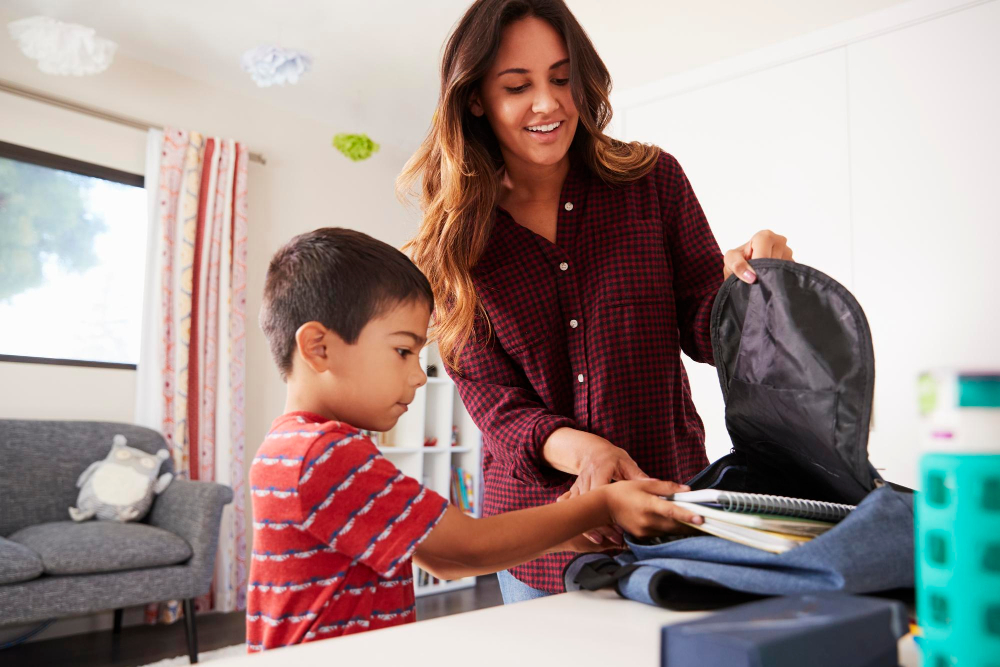
Imagine a child who always has their backpack packed by an adult. They may never have had the opportunity to learn where their lunchbox goes, what they need for school, or how to check whether everything is ready.
Instead of suddenly expecting the child to manage the entire task, responsibility can gradually shift.
Perhaps the child begins by putting the lunchbox inside. Later, they add their water bottle. Eventually, they may learn to check several items before leaving home.
Independence often grows this way: not through one big achievement, but through small responsibilities that gradually become the child’s own.
Look at the Task From the Child’s Perspective
Something that appears simple to an adult may actually involve many different skills.
Consider brushing your teeth. An adult sees one activity: brush your teeth.
A child may need to:
- find the toothbrush, open the toothpaste, put toothpaste on the brush, turn on the water, brush different areas of the mouth, rinse, clean the toothbrush, and put everything away.
If a child struggles with the complete routine, it does not necessarily mean the entire skill is beyond their abilities. They may simply need support with particular parts.
This way of looking at daily living skills for children with autism helps families focus on what the child can already do and identify the next realistic step.
The same approach can be used for dressing, preparing food, organizing school materials, cleaning up after an activity, or completing personal care routines.
Give Children a Meaningful Role in Family Life
Independence is not limited to self-care.
Children can also develop autonomy by becoming active participants in family life.
Depending on their age and abilities, this might mean setting napkins on the table, feeding a pet, putting groceries away, choosing clothes for the next day, watering a plant, sorting laundry, or helping prepare part of a meal.
These activities offer something important that structured exercises sometimes cannot: a real purpose.
The child is not practicing a skill simply because an adult asked them to. Their contribution has a visible result and a place within family life.

Independence Also Means Making Decisions
Being independent is not only about completing physical tasks. It also means having opportunities to express preferences and participate in decisions.
- What would you like to wear?
- Which activity would you like to do?
- What would you like for your snack?
- Would you rather do this now or after dinner?
The choices available will depend on the child’s age, communication abilities, and circumstances, but having an appropriate level of control over everyday experiences can help children develop self-determination and confidence.
Focus on Useful Independence, Not Perfect Independence
A useful goal is not necessarily for a child to complete every activity without assistance.
Sometimes independence means knowing when and how to ask for help.
A child who can prepare most of a snack but asks an adult to open a difficult container is still demonstrating independence. So is a child who completes most of a dressing routine but needs assistance with buttons.
The question becomes less about “Can they do everything alone?” and more about:
“How can they participate as fully as possible?”
That perspective allows independence to be individualized around each child’s strengths and current needs.
How ABA Therapy Can Support Independence
At Brito Behavior Services, developing practical skills for everyday life is an important part of helping children increase their participation and independence.
Our behavioral specialists can work with families to identify meaningful goals, understand which parts of everyday activities are challenging, and break complex skills into achievable steps.
An individualized ABA Therapy plan might focus on self-care, communication, household routines, school preparation, decision-making, or other skills that are relevant to the child’s daily life.
Just as importantly, our specialists collaborate with parents and caregivers so that goals reflect the realities and priorities of each family.
Independence does not happen all at once, and it does not look the same for every child. Sometimes meaningful progress begins with one small part of the day becoming something a child can increasingly call their own.